

Find a Murdoku case by title
The Murdoku case directory matches each puzzle by its original English title, grid size, and difficulty. Enter a distinctive part of the title, such as “Book Club,” “Wine Cellar,” or “Donut House.” If you came from a recording that uses a translated name, enter that title or switch languages at the top of the page. The search matches English, Chinese, and Spanish names stored with the same case.
Each Murdoku entry leads to its own spoiler-controlled guide and to an English printable sheet. The guide links to the official puzzle and gives the clue cards, a blank map, a hint, written reasoning, and a full answer. The print link goes straight to the worksheet. If you only need the official link or the map, leave the spoiler sections closed.
Read the number and difficulty together
The number in the Murdoku directory follows the recording archive. It helps you identify the source part when you compare a screenshot with the video. It is a reference number for this collection, so check the difficulty and title to choose what to play. Grid size also affects how much space you need for notes, even when two cases share the same difficulty.
The Murdoku levels in this directory run from very easy to expert. A label tells you how a case is grouped, while the actual challenge may come from the clue type or the scale of the map. A six-by-six board can teach a two-person relation in a few minutes. A larger case may force you to track an area quota alongside multiple people, even if some initial placements are quick.
Very easy Murdoku cases for the first solve
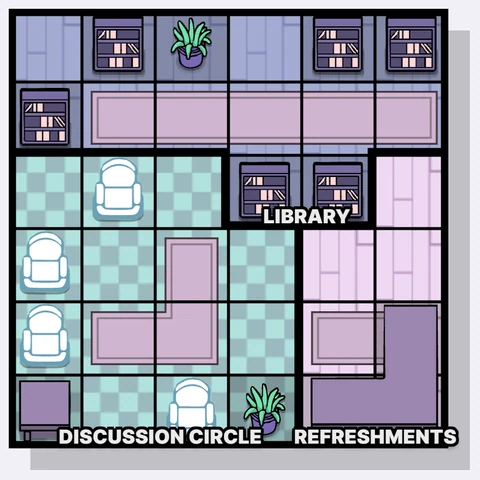
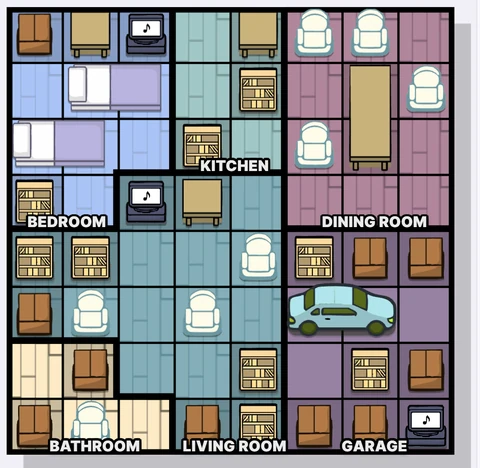
The Book Club teaches a useful opening sequence. Read a room clue, remove cells next to an excluded object, then use the row and column of a confirmed square. Its labels and furniture fit on one page when printed. The Murdoku rules guide uses this case to explain how to read a coordinate and what to check before you submit.
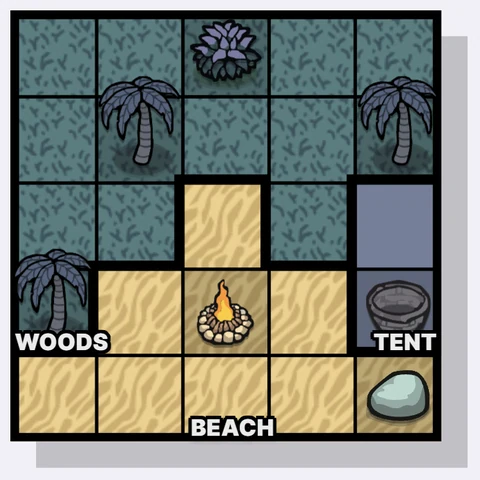
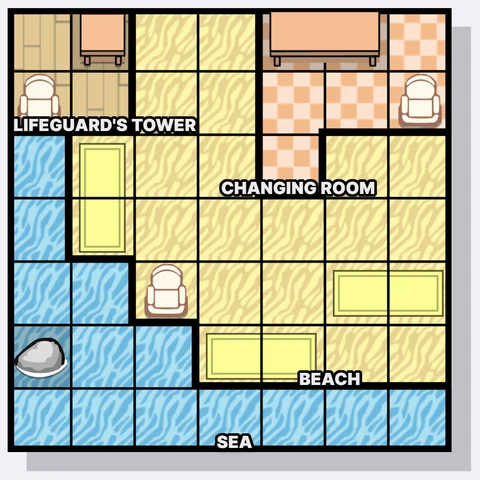
24-Hour Delivery brings an “only” clue into a small Murdoku board. You can practice distinguishing the one person allowed to use an object from the other people seeking nearby positions. Fireside Beach asks you to look at the boulder, tree, and different map areas. Those compact boards are good choices if you want to try a full puzzle before learning a longer technique.
Easy and medium Murdoku puzzles for practice
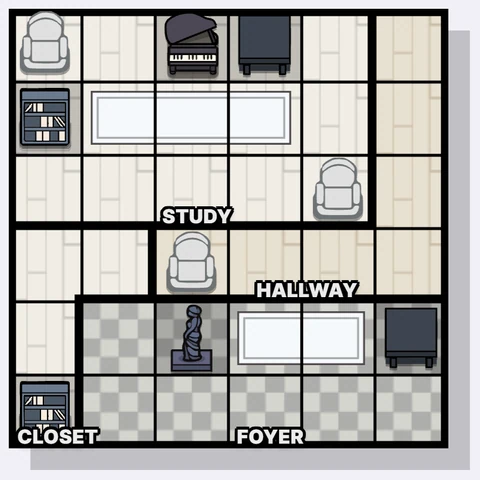
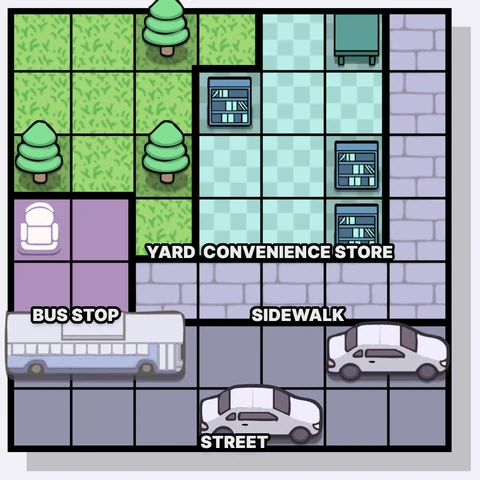
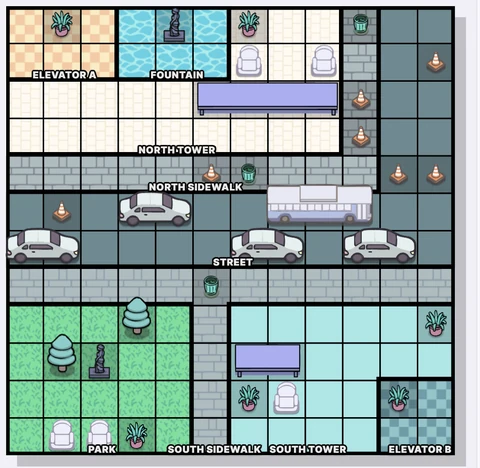
In The Piano Lesson, one Murdoku clue links an unnamed piano-side person to a suspect exactly one row away. Try writing the pair of rows in your notes before trying to name both people. In The Bus Stop, the car and bus clues give you different kinds of vehicle squares, and direction language affects the next column you can use.
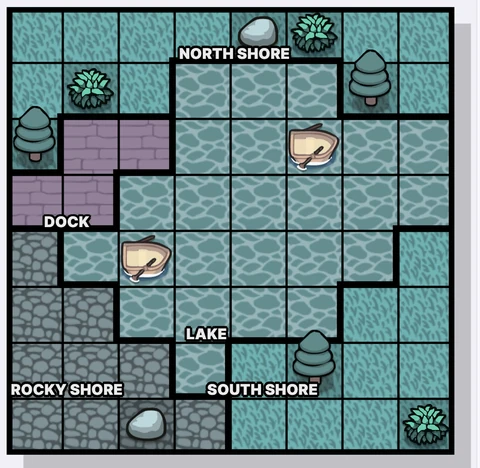
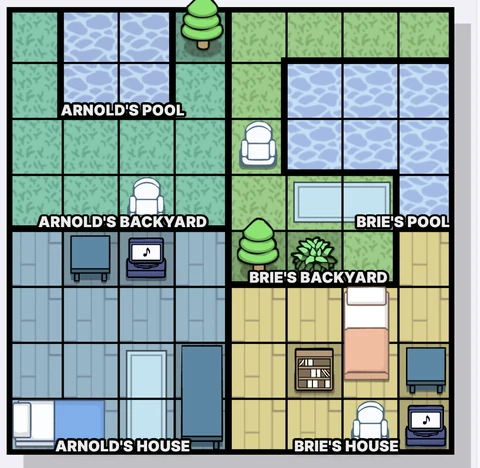
For medium Murdoku cases, Lake Fishing is useful practice with areas that cannot hold a person alone. Use a tally for the Dock and each shore, then revisit it when you remove a row. Neighbour Dispute gives useful practice with the intersections of two candidate cells. If you can narrow someone to two cells on different rows and columns, the strategy guide explains the extra deduction you can make.
Hard Murdoku cases with several overlapping clues
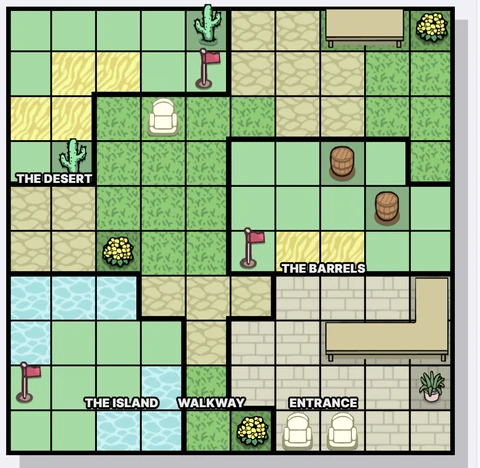
Minigolf asks you to use several kinds of information at once. Paths, flags, and patches of sand are visual clues, while the headcount near a table or barrel affects entire columns. In a Murdoku case like this, note when a row or column belongs to one of a small group of people before deciding which person takes which square.
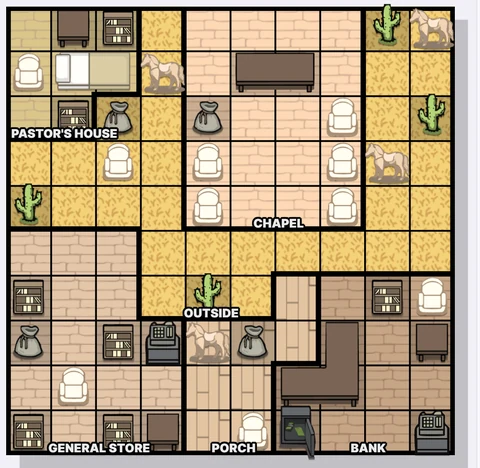
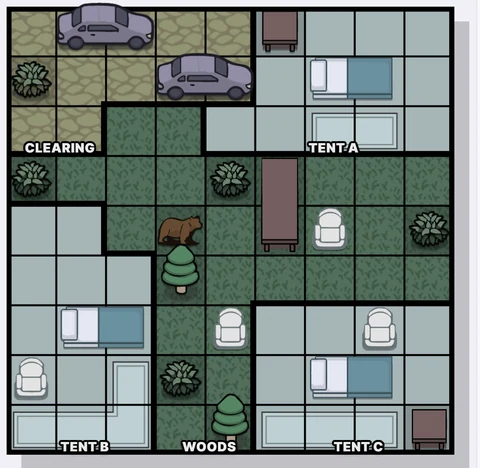
Grizzly Night uses tents, a shrub, and a vehicle. The “only” restriction helps distinguish a square beside the right object from a square that simply looks plausible. The Donut House has a central hole in its map, and an area may be empty. Treat the blank spaces and the room count as part of the Murdoku puzzle. Fill the areas you can justify before deciding where the empty room belongs.
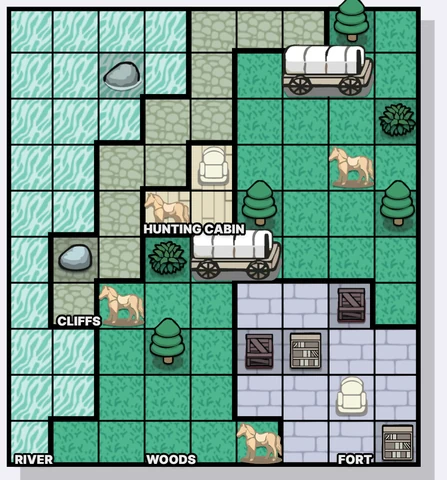
River Crossing changes the usual geometry. This Murdoku puzzle uses a rectangular board and specifies an empty edge row. It also distinguishes an outlaw from the murderer. Solve both questions with the right evidence. The person who fits a named role need not be the person found with the victim.
Expert Murdoku cases and hidden entries
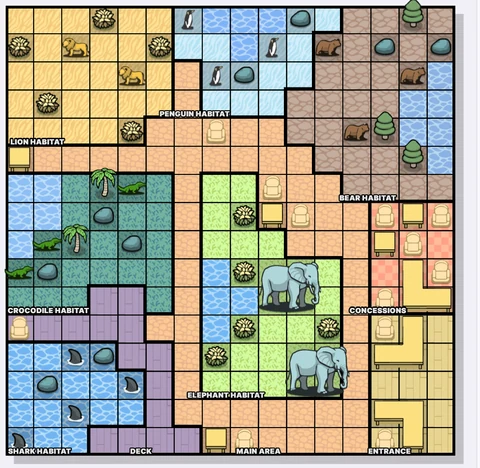
The Zoo has a sixteen-by-sixteen Murdoku board and a rule about visitors and keepers. Divide the people into those roles before marking habitat candidates. For every occupied area on your scratch sheet, leave a note showing whether the case forces a particular role there. The recording ends during an attempt. The guide shows the complete layout replayed in the official game after we checked every coordinate against the official case data.
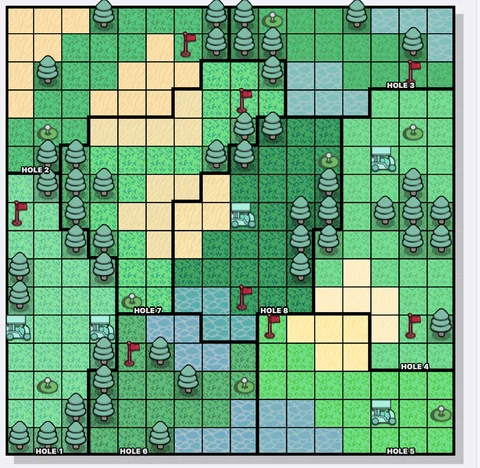
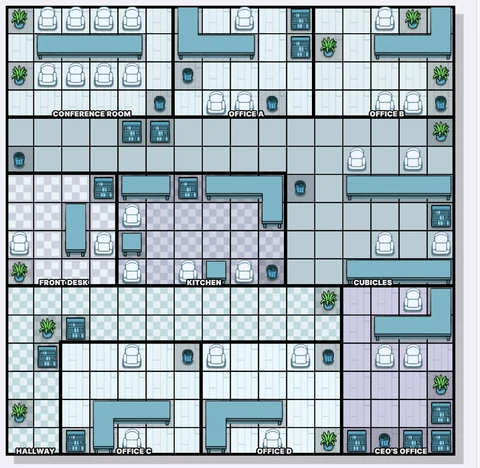
The Golf Course uses headcount parity at the numbered holes. Work one hole at a time and record which can or must hold multiple people. The CEO’s Office asks you to distinguish office owners from guests and follow their relative positions. These Murdoku cases reward an area and role table that sits beside the grid.
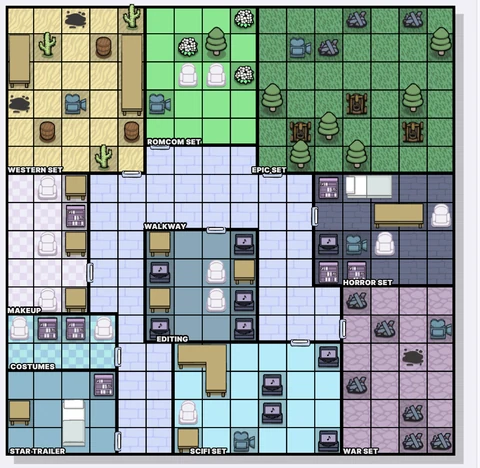
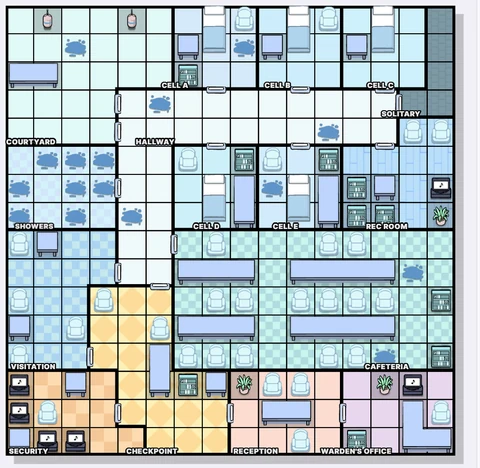
The hidden Murdoku entries are The Movie Studio and Solitary Confinement. Enable Show hidden cases to include them in your filtered list. The first asks you to account for each camera’s neighbors. The second splits prisoners and guards and uses relationships between cell areas. Open them when you are ready to work through a larger map.
Use a hint, then return to your grid
Each Murdoku case starts with an unsolved map and its original clues. Read the opening hint when you want a starting point. It suggests a room, object, or constraint to check without listing the complete solution. The walkthrough has intermediate coordinates and two official game screenshots. Read a step, reproduce the elimination on your own map, and then close the guide if you have enough to continue.
The Murdoku answer section is best for checking a completed attempt. Its placement table can show whether you copied a column number incorrectly or placed someone in a nearby room. If the grid in your game looks different, compare its size and title with the guide’s opening board. The screenshots show the official game version used.
Keep a small practice queue
Choose three Murdoku entries that exercise different moves. Start with a small furniture clue, move to a case that forces a pair, and finish with a case-wide headcount or role restriction. The printable Murdoku directory is useful for tracking a practice set. Print each blank map on its own and keep any answer appendix out of sight. Note which kind of elimination was hardest so you know what to practice in your next case.
Match the right Murdoku board before using a walkthrough
Before copying a coordinate from a Murdoku guide, compare one fixed detail with your board. Choose an object that is easy to find, such as a piano, a large car, or the only bookshelf in a named room. Check its row and column on both maps. That quick comparison catches a title match with a different board, and it also catches the occasional mistake of reading the grid from the opposite corner.
Keep the individual clues nearby even if you have already found the matching Murdoku case. A puzzle can add an occupancy rule above the cards, so a walkthrough that starts with a room count may make little sense until you read the case-wide clue. Review the number of people, the rows and columns, and the special constraints in that order. On a rectangular board, write down which lines are allowed to remain empty.
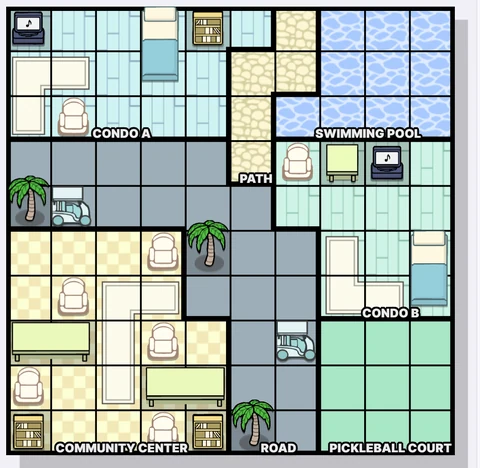
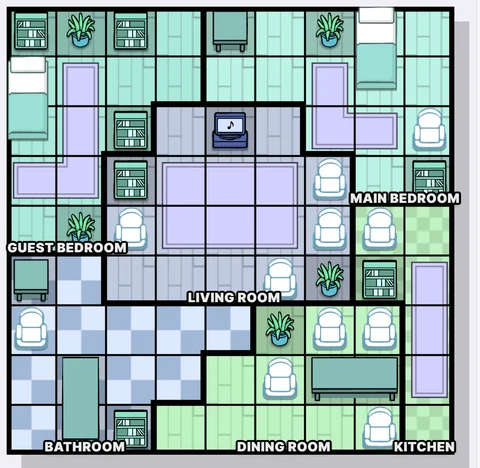
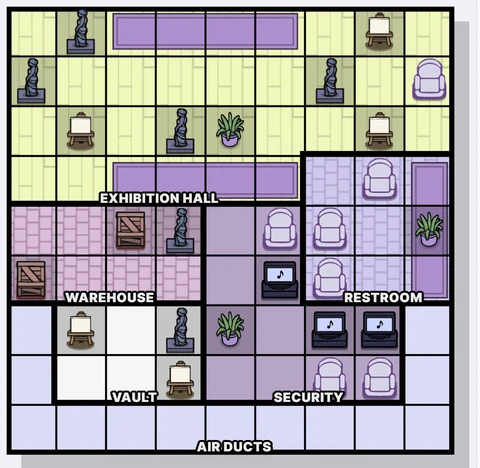
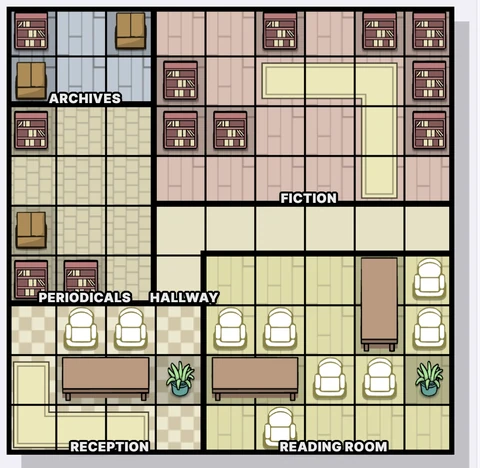
When your Murdoku board differs from the screenshots, open the official case from the guide and compare its title, grid size, and the layout of its rooms and key objects. The opening image is the best reference for the original board. The later images help check the route through it. If you only want the final positions, open the answer panel after confirming that the grid and the original title match.